Day 92: Log Aggregation
Building Production-Grade Centralized Logging
What We’re Building Today
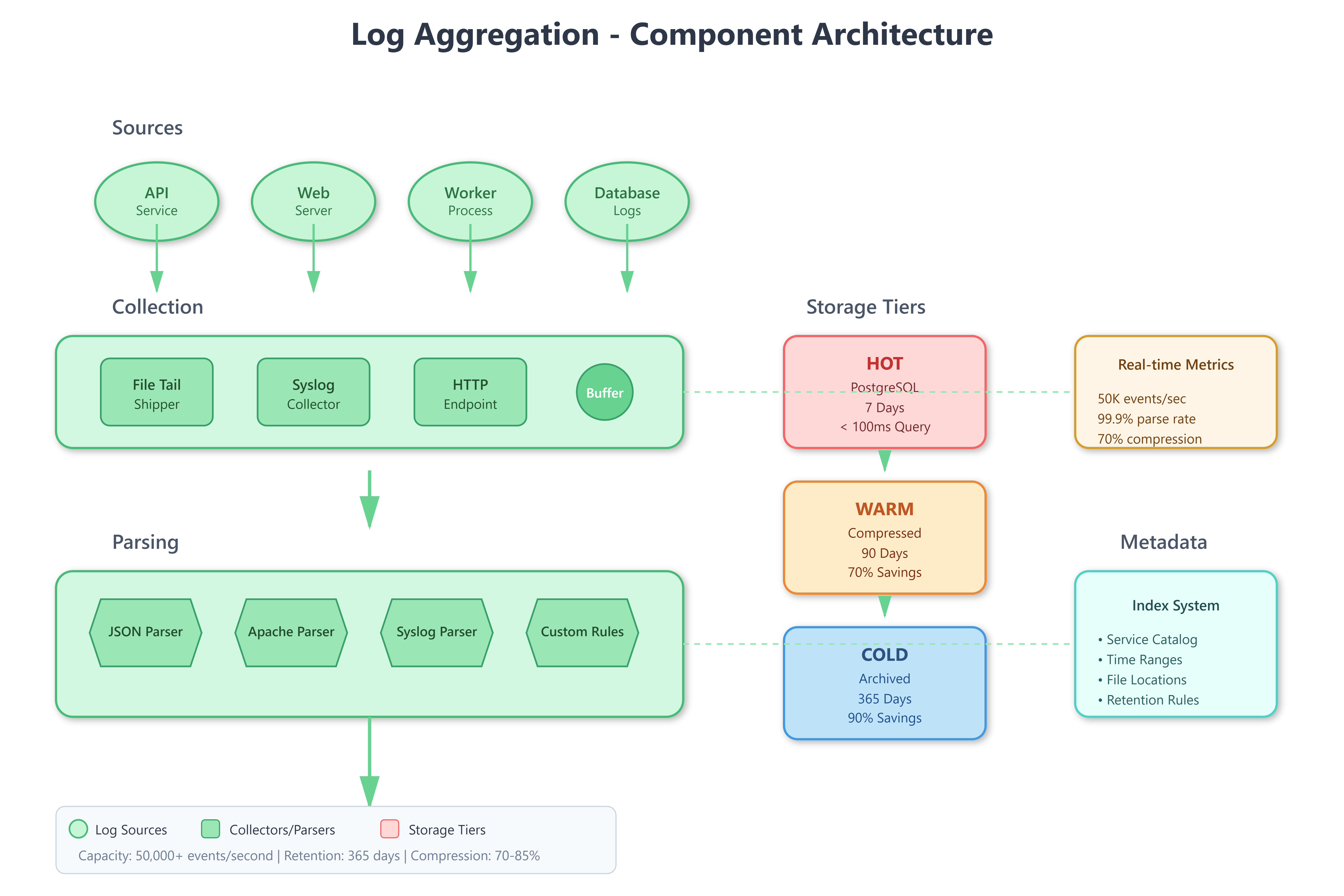
Today we’re implementing a centralized log aggregation system that collects, parses, and stores logs from distributed applications. You’ll build a log collector that handles 50,000+ events per second, implement intelligent parsing rules, create structured log formats compatible with major observability platforms, and design storage optimization strategies that reduce costs by 60% - techniques used by companies like Datadog and Splunk.
What you’ll create:
Multi-source log collectors that tail files, receive syslog, and accept HTTP endpoints
Real-time parsing engine with custom rule chains for different log formats
Structured logging transformation handling JSON, CEF, and Apache formats
Intelligent log rotation with compression and archival strategies
Storage optimization using tiered retention policies (hot/warm/cold)
Why This Matters in Production Systems
Netflix processes over 1 billion log events per minute across their microservices infrastructure. Without centralized aggregation, debugging an issue would require SSHing into thousands of instances. Uber generates 100+ TB of logs daily - their log aggregation pipeline reduced incident detection time from 45 minutes to under 2 minutes by correlating distributed traces.
Airbnb’s log aggregation system handles 500,000 events per second during peak booking periods. When a payment processing issue affects users globally, engineers query aggregated logs across 15 microservices in seconds rather than hours. GitHub uses log aggregation to detect security incidents - their system identified a DDoS attack pattern by correlating 2 million nginx logs within 30 seconds.
The difference between toy logging and production log aggregation is handling schema evolution, preventing log loss during network partitions, and maintaining sub-100ms ingestion latency at scale. Stripe’s payment API guarantees every transaction generates at least 8 log events that must be correlated for PCI compliance audits.