

Day 39: Building Smart Alert Rules API
The Brain Behind Intelligent Monitoring
What We’re Building Today
Today we’re constructing the command center for our monitoring system - an Alert Rules API that acts like a sophisticated traffic controller for your infrastructure alerts. Think of it as the Netflix recommendation engine, but for determining when your servers need attention.
Today’s Learning Goals:
Rule creation and modification endpoints
Intelligent validation logic
Bulk operations for enterprise scale
Template system for rapid deployment
Testing framework for rule verification
Why Alert Rules Matter in Production Systems
Ever wondered how Slack knows to alert their engineering team when message delivery drops below 99.9%? Or how Netflix detects when video streaming quality degrades before users complain? The secret lies in sophisticated alert rules that continuously evaluate system metrics against predefined thresholds.
In production systems serving millions of users, manual monitoring becomes impossible. Alert rules act as your digital sentinels, watching over hundreds of metrics simultaneously and triggering notifications only when intervention is truly needed.
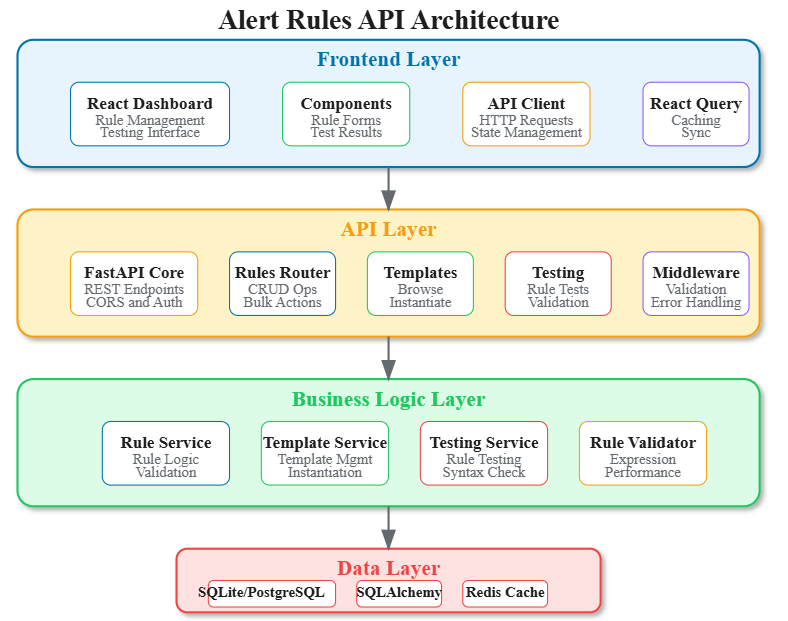
Core Architecture: The Alert Rules Engine
Our Alert Rules API consists of three primary components working in harmony:
Rule Engine Core
Processes incoming metric data against defined rules, evaluating conditions in real-time. It’s like having a chess grandmaster analyzing thousands of board positions simultaneously.
Validation Layer
Ensures rules are syntactically correct and logically sound before deployment. This prevents the classic “false positive storm” that can overwhelm engineering teams.
Template System
Provides pre-built rule configurations for common scenarios. Think of it as having architectural blueprints for different types of buildings - you don’t start from scratch every time.
Data Flow: From Rule Creation to Alert Generation
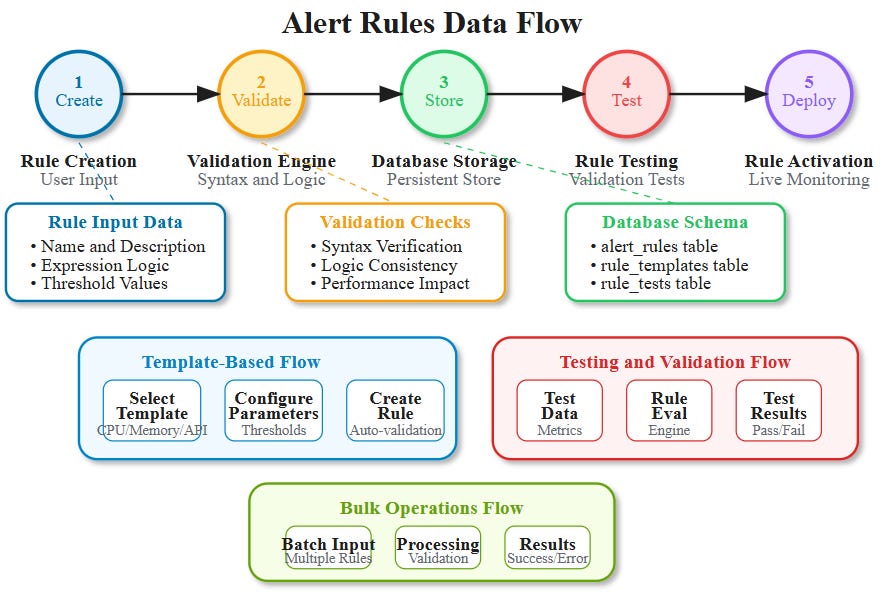
The journey begins when engineers define rules through our API. Each rule undergoes validation, gets stored with versioning support, and enters the active evaluation pipeline. The system continuously ingests metrics, applies rules, and triggers alerts when thresholds breach.
What makes this powerful is the feedback loop - alert outcomes inform rule refinement, creating a self-improving system that reduces noise over time.
Rule Validation: The Intelligence Layer
Modern alert systems must prevent configuration errors that create alert fatigue. Our validation engine performs several checks:
Syntax Validation - Ensures rule expressions are properly formatted
Logic Verification - Detects contradictory conditions that would never trigger
Performance Impact - Estimates computational cost to prevent system overload
Historical Testing - Runs rules against past data to verify expected behavior
Bulk Operations: Enterprise-Grade Efficiency
Managing thousands of rules individually becomes unwieldy. Our bulk operations API enables:
Mass rule updates during system migrations
Template-based deployments across multiple environments
Batch testing before production rollout
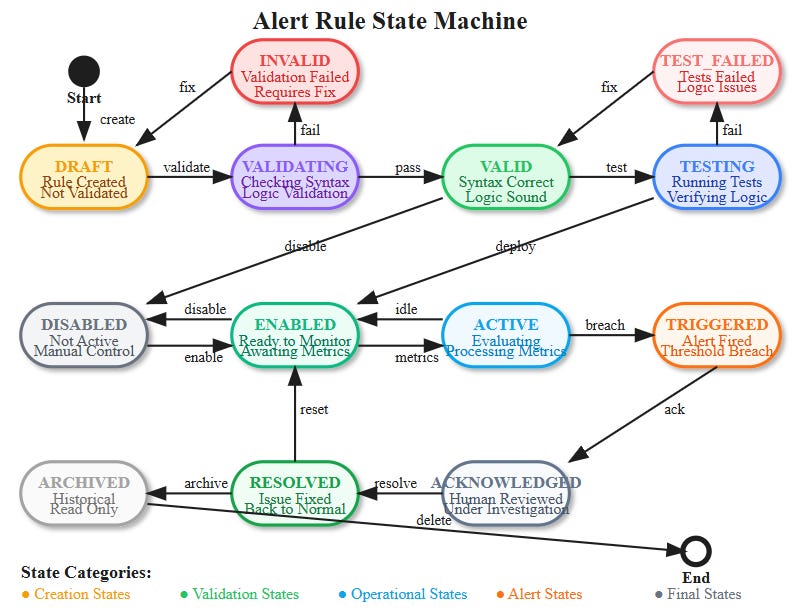
Template System: Accelerating Best Practices
Rather than recreating common patterns, our template system provides battle-tested configurations:
CPU Utilization Templates - For different workload types
Database Performance Rules - Covering connection pools, query performance
API Response Time Alerts - With automatic baseline detection
Real-World Integration Points
Your Alert Rules API connects to the broader monitoring ecosystem:
Metrics Ingestion - Receives data from Prometheus, custom collectors
Alert Processing - Feeds validated alerts to notification pipelines
Dashboard Integration - Provides rule management interface
Audit Systems - Tracks rule changes for compliance
Testing Framework: Confidence in Production
Rule testing prevents surprises in production. Our framework supports:
Historical Replay - Test rules against past metric data
Simulation Mode - Preview alert volume before activation
Regression Testing - Ensure changes don’t break existing functionality
Youtube Video:
