

Day 21: Server Management Integration - The Orchestration Layer
What We're Building Today
Today we're connecting all server management pieces into a cohesive system. Think of it as wiring your car's dashboard - individual gauges are useless until connected to the engine. We'll implement real-time status updates, comprehensive error handling, and test the complete server lifecycle from creation to deletion.
Today's Agenda:
Integrate frontend UI with backend APIs
Implement WebSocket connections for real-time updates
Add comprehensive error handling and recovery
Test complete server lifecycle operations
Build monitoring dashboards with live status feeds
The Integration Challenge
Most engineers build components in isolation - databases here, APIs there, frontends somewhere else. The magic happens in integration. Real systems like AWS EC2 Console or Digital Ocean's dashboard don't just show static server lists; they provide live heartbeats, instant status changes, and seamless error recovery.
Component Architecture Overview
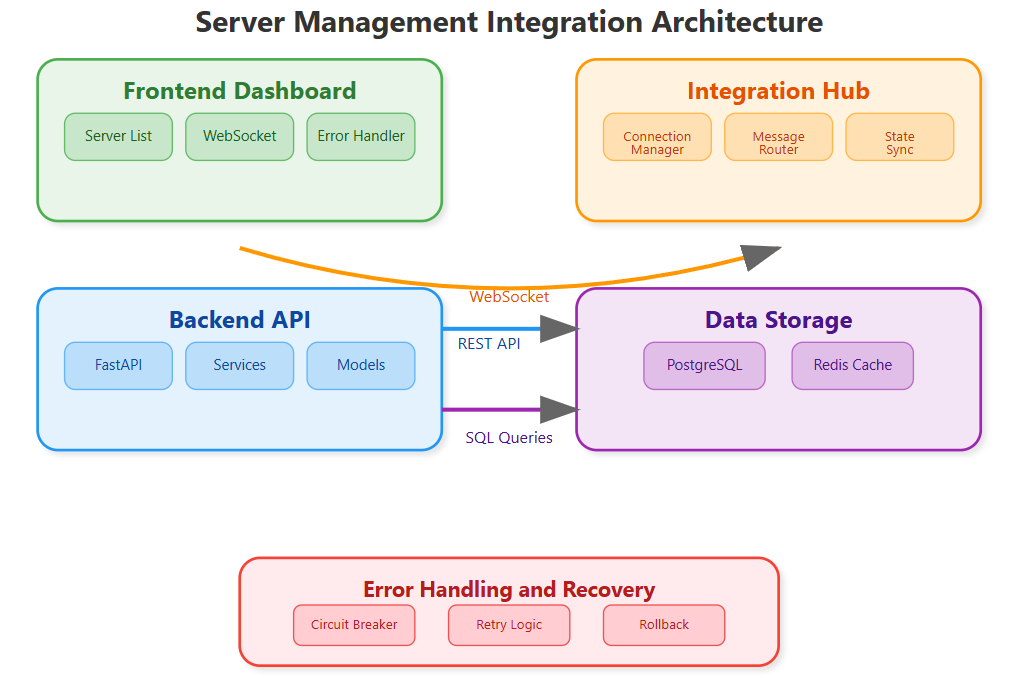
Our integration layer sits between three critical components:
Frontend Dashboard: React components displaying server status
Backend API: Python FastAPI handling CRUD operations
WebSocket Service: Real-time bidirectional communication
The architecture follows a hub-and-spoke pattern where the integration service acts as the central coordinator, managing state synchronization between all components.
Real-Time Status Updates: The Heartbeat System
