Day 113: Backend Performance
What We Build Today
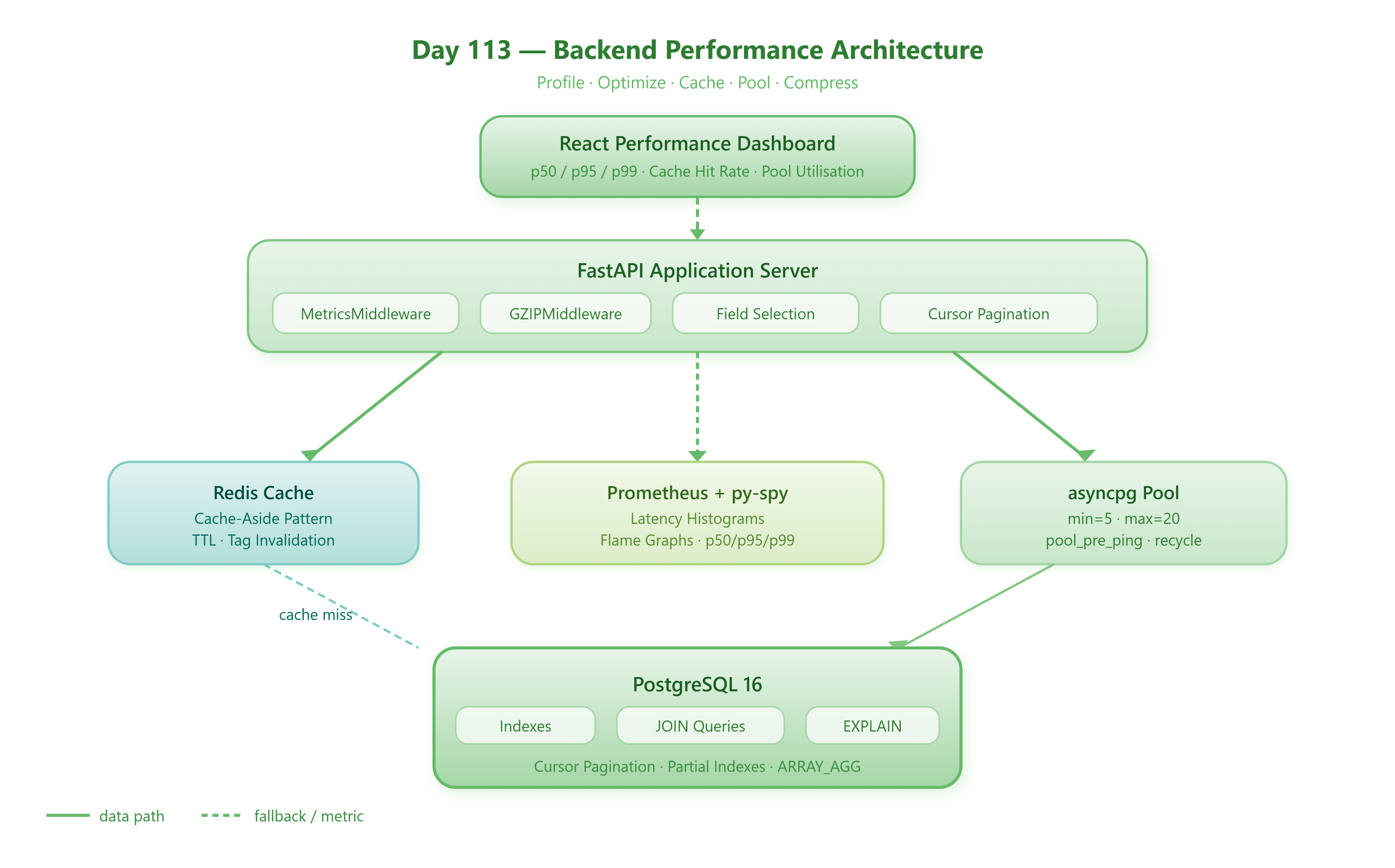
By the end of this lesson you will have a fully instrumented FastAPI backend that:
Profiles every request with real latency histograms using
py-spy+ PrometheusRewrites slow N+1 database queries into lean JOIN-based queries with
EXPLAIN ANALYZELayers a Redis cache with intelligent TTL and cache-aside patterns
Pools PostgreSQL connections via
asyncpg+ SQLAlchemy asyncCompresses and shapes API responses with field selection, pagination cursors, and
msgpackShips a live Performance Dashboard in React showing p50/p95/p99 latencies, cache hit rates, and pool utilisation — styled after Datadog’s APM UI
Prerequisites: Python 3.12+, Node.js 18+, Docker Desktop running, and the build.sh / stop.sh scripts from the project implementation package.
Part 1 — The Concepts
1. Why Backend Performance Is Non-Negotiable
Every 100 ms of additional latency costs Amazon approximately 1% of revenue. That is not a myth — it is a documented internal benchmark that became an industry reference point. At the infrastructure management layer we are building, a slow API means slow dashboards, slow alert acknowledgement, and engineers staring at spinners when incidents are live. Performance is a feature, not an afterthought.